 Archaeological site, Historical landmark, Tourist attraction
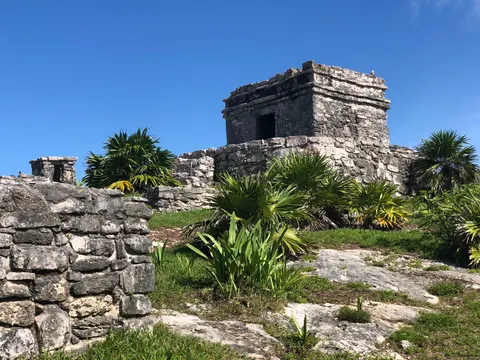
Tulum
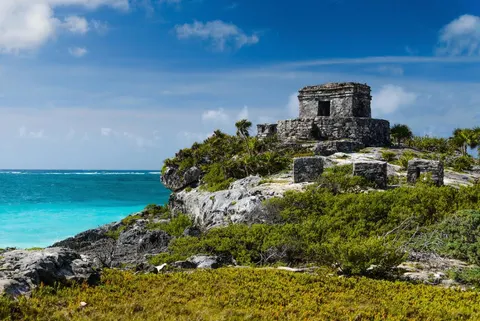
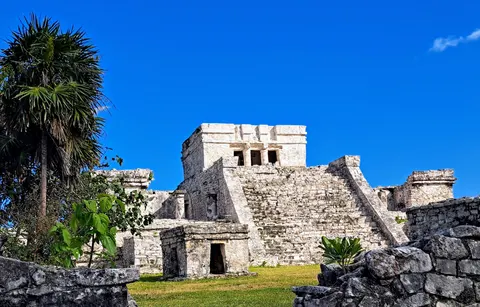
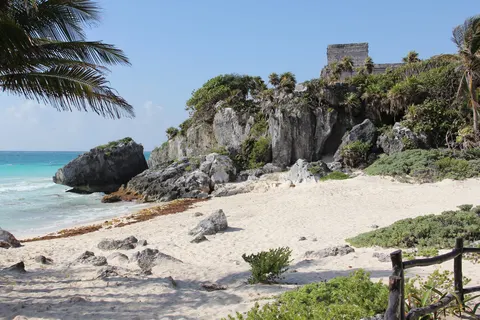
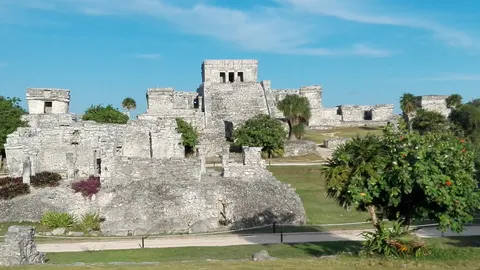
Once called Zamá, Maya for 'dawn', this walled site stands on cliffs above the Caribbean, with El Castillo, well-preserved murals and iguanas sunning themselves on the ancient stones.
The story
In the sixteenth century the site was known as Zamá, Maya for 'morning' or 'dawn'. The later name, Tulum, means 'wall' or 'palisade', after the defensive wall that still encloses the core on its north, south and west sides while the east opens onto the Caribbean. That wall has five entrances and two watchtowers. The site is the most emblematic on Quintana Roo's coast for its well-preserved buildings and mural paintings. El Castillo, the tallest structure, crowns the cliff with a temple whose entrances bear serpent columns, with zoomorphic masks at its corners. A dance platform stands in front of it. To the southwest, the Temple of the Initial Series yielded Tulum's earliest recorded date, 564 AD. Iguanas lounge among the ruins and exotic coastal plants, and a museum on site adds context after the walk.
Good to know
TAGGG AI- ✦Plastic bottles are not allowed inside, so bring a metal or reusable water bottle through the strict security check.
- ✦The ruins take about an hour to see on your own, though a guide adds depth on Maya history and the calendar.
