Historical landmark, Tourist attraction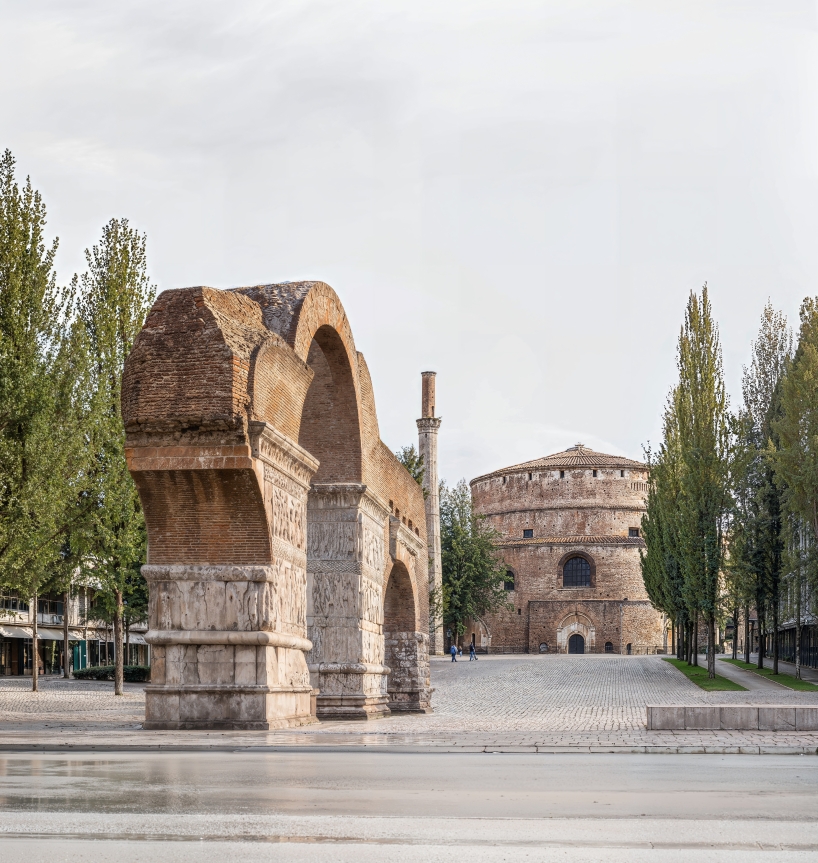
Rotonda
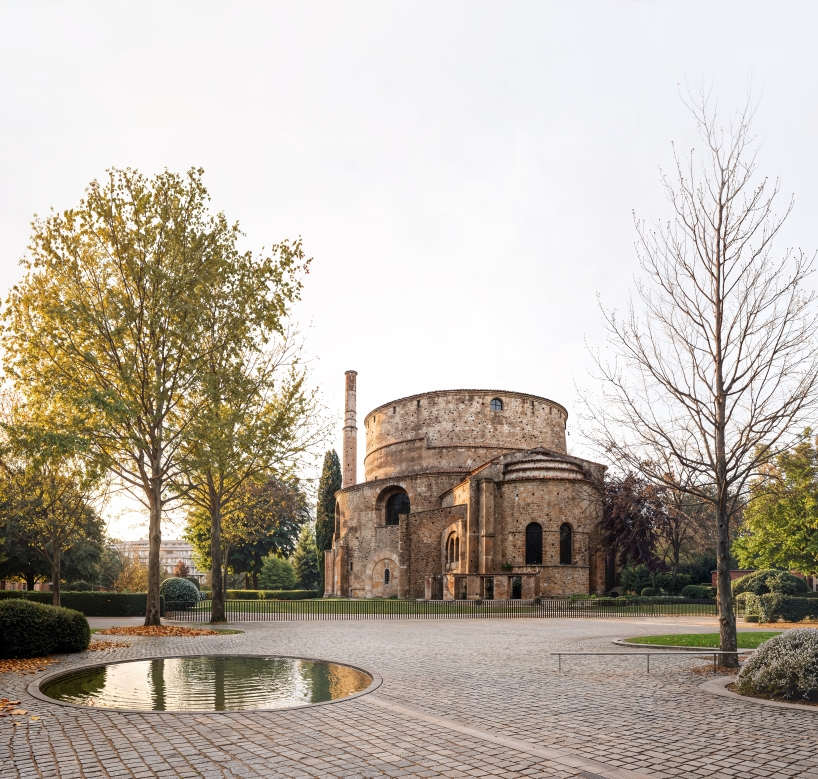
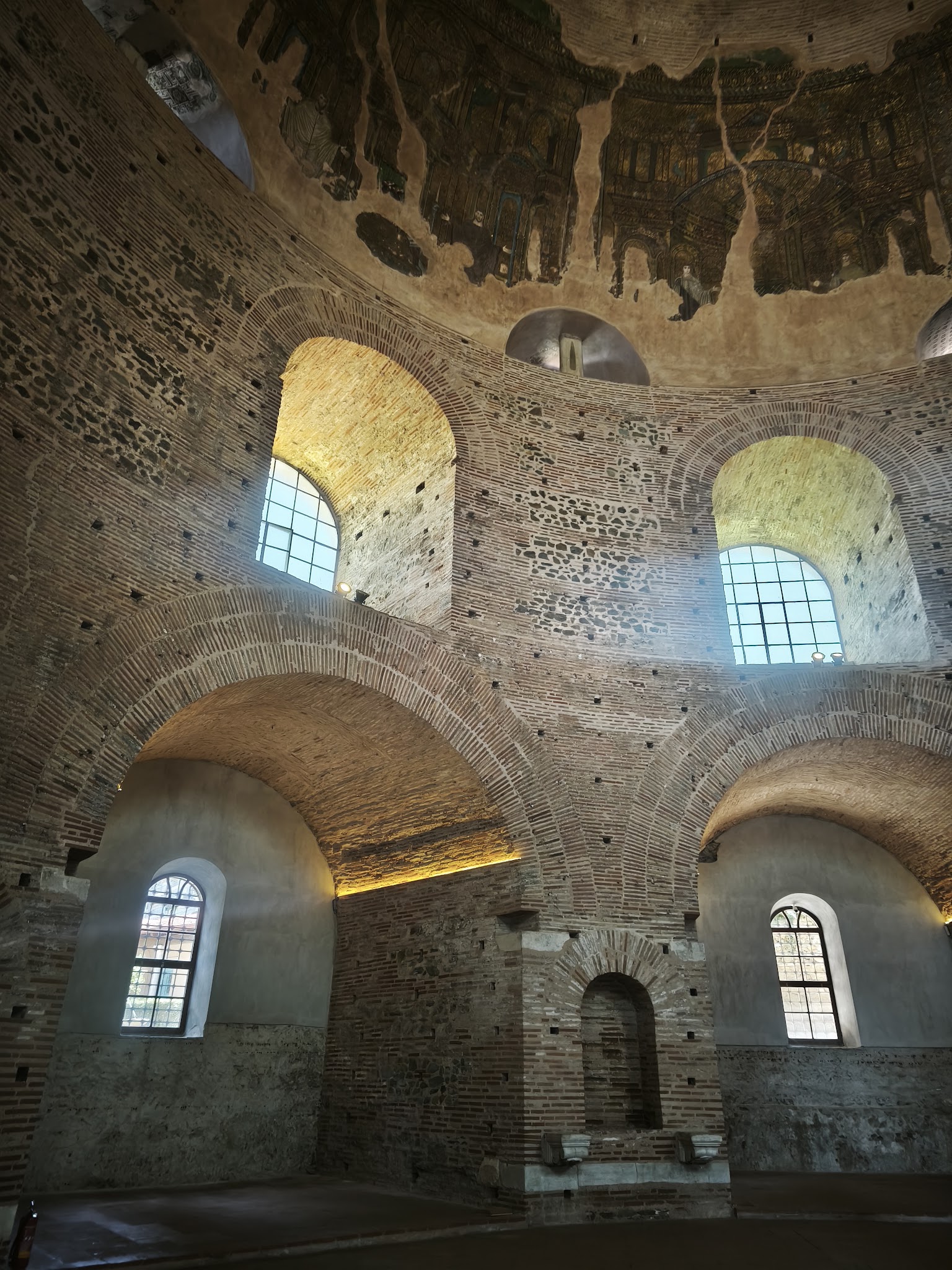
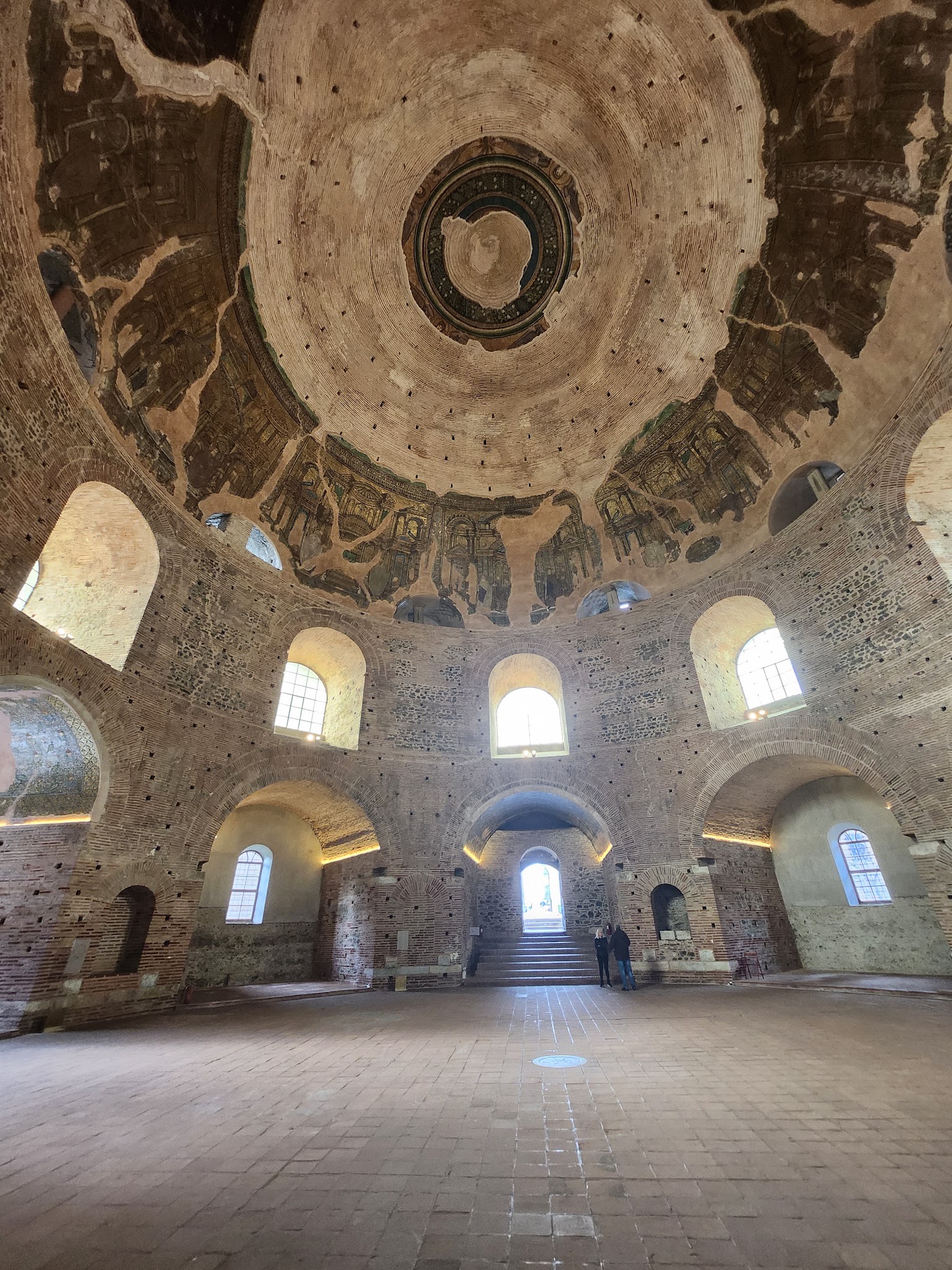
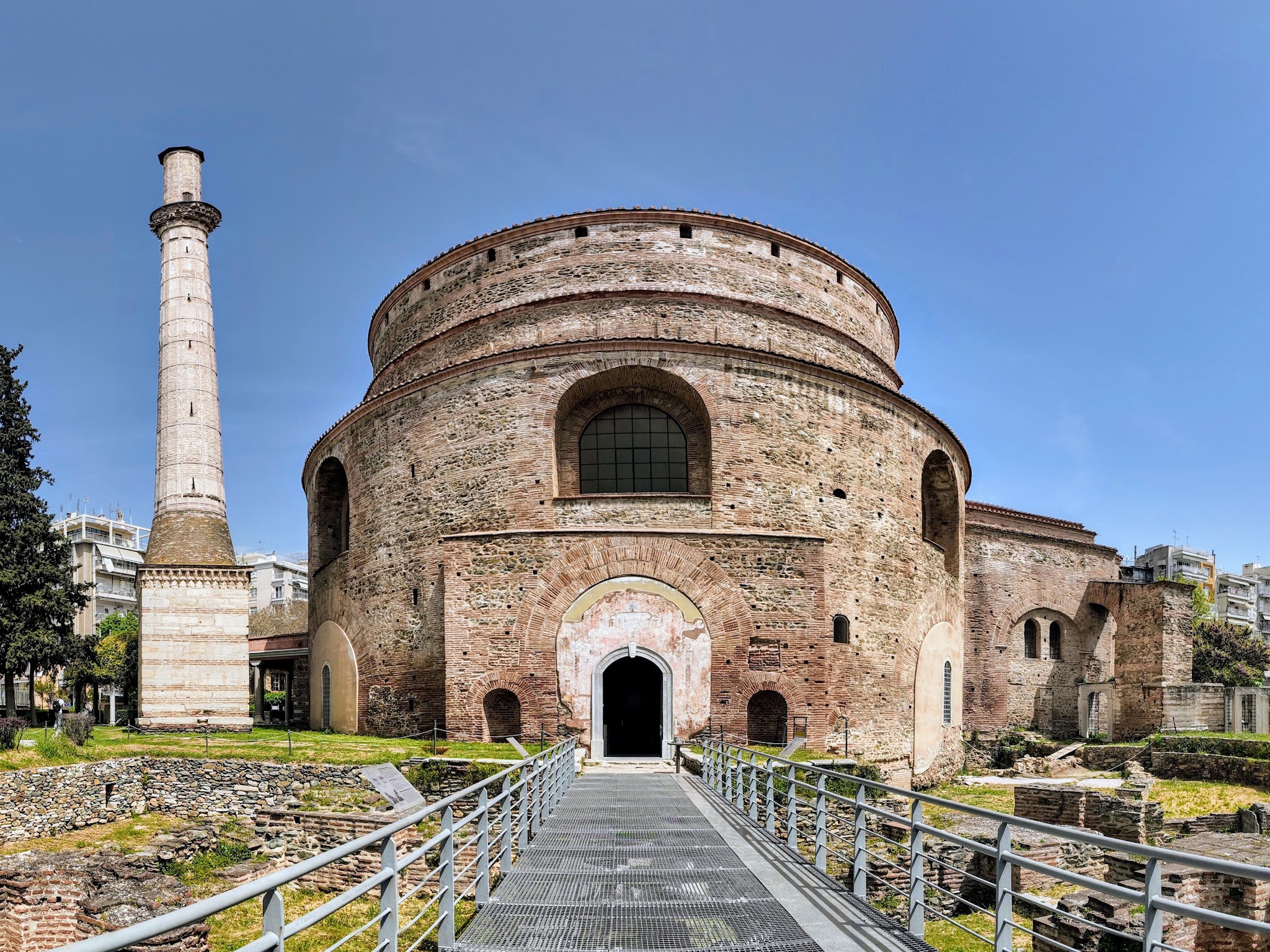
Built by the emperor Galerius around 300 AD, this brick rotunda has served as mausoleum, church and mosque, and still holds some of the finest early Christian mosaics in its 24.5-metre dome.
The story
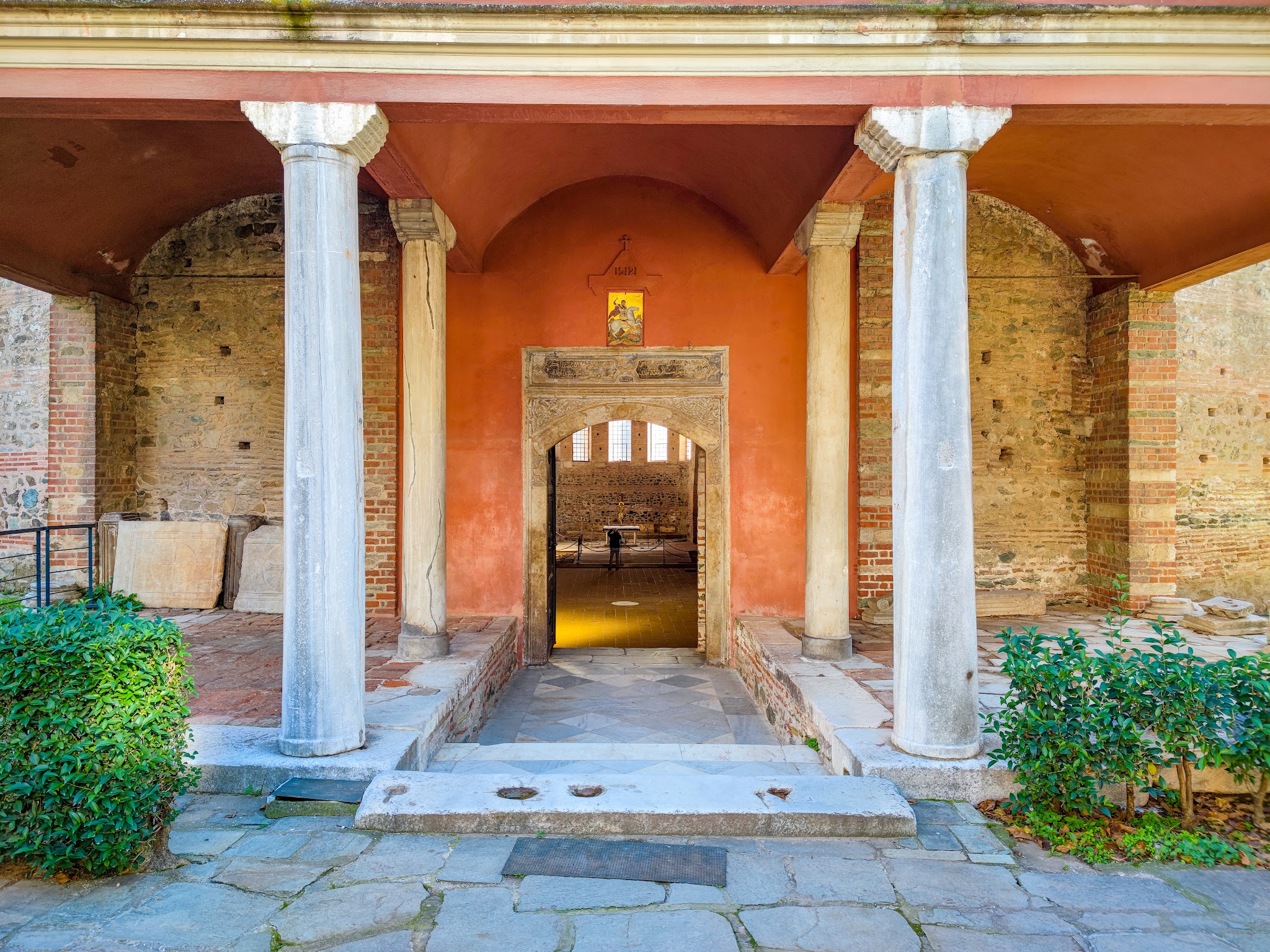
Brick walls 6.3 metres thick enclose this circular building, raised in the late third or early fourth century as part of Galerius's palace complex and linked by axis to his triumphal arch on Egnatia. Its original use is unclear, though the prevailing view is an imperial mausoleum. Under Theodosius the Great it became a church: an apse was widened for the sanctuary, an ambulatory added and the entrance moved west. Golden mosaics survive in the dome and the arches of the eight niches, with saints posed against architectural backdrops, and a ninth-century Ascension fresco fills the apse. Known as the church of the Asomatoi, it served as the city's cathedral until at least the 13th century, became a mosque in 1590 and keeps a solitary minaret. Stand at the centre to hear whispers echo back.
Good to know
TAGGG AI- ✦Visit early in the day for a quieter, calmer interior, and allow about 45 minutes to see everything.
- ✦A small annex runs videos and an interactive display on the building's history, and an audio guide is available by QR code.
- ✦Stand on the central spot under the dome to experience its remarkable acoustics, where even whispers echo back loudly.